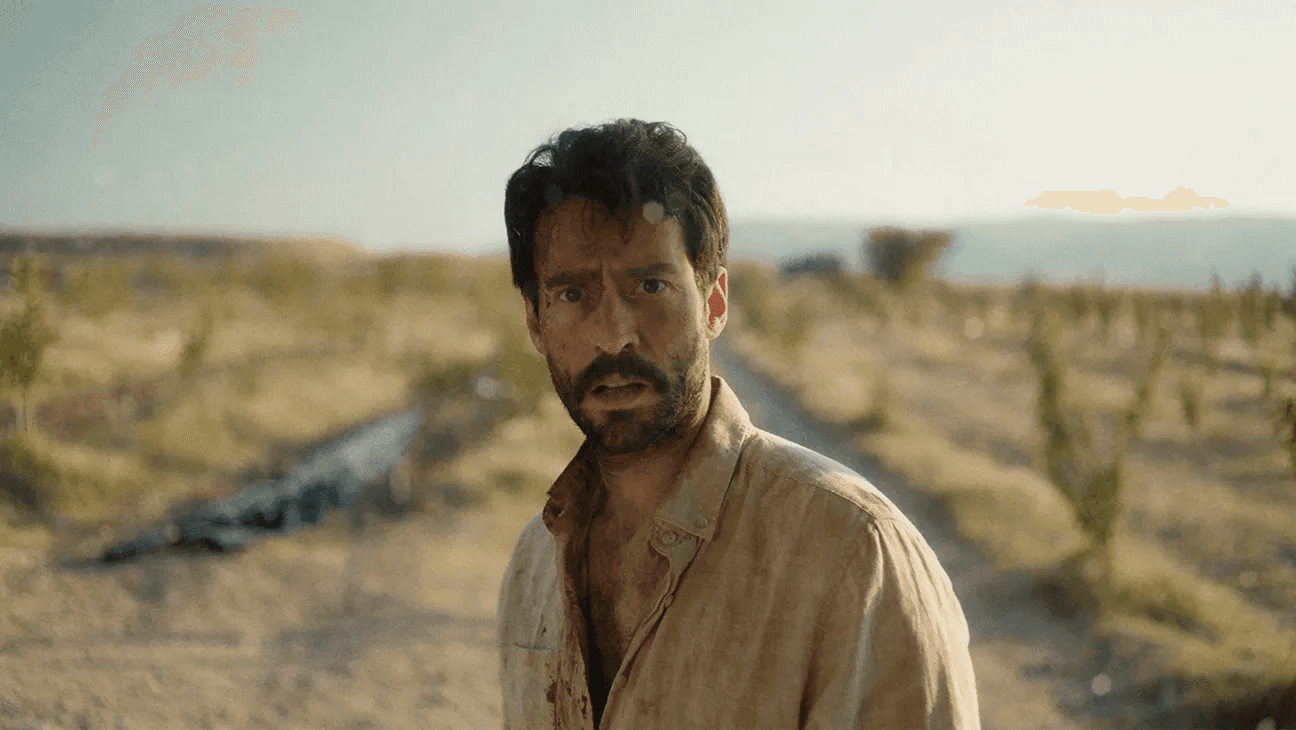

Awards season is here again! But before the Academy Awards premiered last Monday, the Loyola Film Circle conducted their own vote on who among the many nominations should win their respective category.
After a weekend of voting, and the Academy Awards being hosted by Conan O'Brien, with one of the funniest cold opens in the show's history. The results came in. The final awardees of the 2026 Oscars both met and subverted the expectations of the voting LFC members.
Best Picture
by Arianne Dela Cruz
Oscar Winner: One Battle After Another (dir. Paul Thomas Anderson)
LFC Vote: Sinners (dir. Ryan Coogler)
In an alternate universe of the United States, violent radicalism in this counterculture thrives in a wounded revolution, as the French 75 revolutionaries are being hunted down by the government and the Christmas Adventurers Club. Directed by Paul Thomas Anderson, it is an interplay between revolution and authority, how memory, ideology, and power can be divisive and conflicting in a nation.
There is a juxtaposition of the first and last scene of Pat/Bob’s (Leonardo DiCaprio) lines that perfectly encapsulate the essence of the film’s narrative. Pat/Bob (latter part of the story) was first seen in a train station saying the lines, “From here on out, it’s one battle after another,” foreshadowing the fate of their revolutionary group, French 75. The hills are a symbolic manifestation of Bob’s dialogue, an interplay that politics and life are one battle after another. Although the resolution showed that Bob finally reunited with his daughter Willa, it concluded with Willa joining a new protest exemplifying how resistance and revolution is a continuous cycle of the need for reforms and fight against oppression.
Paul Thomas Anderson winning the Oscars is long overdue. Throughout his 30 years in the film industry, he has received 14 Academy Award nominations varying from screenplay, picture and director for There Will Be Blood, The Master, Phantom Thread, and Licorice Pizza. 2026 had surely taken him by surprise as One Battle After Another won three consecutive wins for Best Picture, Director, and Adapted Screenplay. One could say that ensemble cast films are typically favored by the Academy, showcasing distinguished levels of acting and prestige.
Furthermore, having Leonardo DiCaprio as a protagonist also surely gained a lot of traction amongst the public and cinema enthusiasts alike.
Americans love good political films, such as Malcolm X, All the President’s Men, and The Conversation. A cat and mouse, David and Goliath sort of battle, sociopolitical films especially in this day and age helps the audience process social issues such as state violence and widespread surveillance in the lens of a movie screen.
The desert chase sequence of the Hills can arguably be a scene that will go down in history books or in the terms of visual storytelling, a cinematic revolution. There is a distinct crudeness with the usage of VistaVision emphasizing the doubled size of each frame, inspired by 70s cinema such as French Connection and The Last Detail.
Filmed in the winding “River of Hills” in the Anza-Borrego Desert State Park in Southern California, there was an intensifying emotional tension with the three cars and a magnificent score that significantly highlights the visual strength of the whole sequence. Focusing on the crest of the hill, there was an emphasis of speed and scale as the topography of movement was able to perfectly capture the in-and-out car chase.
Ultimately, there is a sense of stillness and shakiness in the way cameras are held, and the narratives are framed showcasing the rawness of the battles that the characters are facing.
Best International Feature Film
by Christine Laza
Oscar Winner: Sentimental Value (dir. Joachim Trier)
LFC Vote: Sentimental Value (dir. Joachim Trier)
After an exceptional year for international films, one feature stood triumphant amongst its counterparts during Hollywood’s biggest night. With a staggering total of 9 nominations, Joachim Trier’s Sentimental Value (Affeksjonsverdi) took home the Oscar for Best International Feature film, becoming the very first Norwegian film to be awarded the title. Beating out France’s “It Was Just An Accident,” Spain’s “Sirāt,” Tunisia’s “The Voice of Hind Rajab,” and fellow Best Picture nominee Brazil’s “The Secret Agent.”
Set in the country’s capital, Oslo, the dramedy traverses through the lives of the dysfunctional Borg household, focusing on the stories of estranged patriarch and well-acclaimed film director Gustav Borg (Stellan Skarsgård), stage actress Nora Borg (Renate Reinsve), & the youngest member of the family, historian Agnes Borg Pettersen (Inga Ibsdotter Lilleaas), as they reunite after the passing of Sissel Borg, Gustav’s ex-wife and the siblings’ mother. The film showcases the fragile and often complex connection between art and oneself, becoming a contemplation on both the healing force held by art and the destructive potency it holds as it disillusions its creator away from real-life experiences. Reflective of Trier’s signature filmmaking approach, Sentimental Value is shaped by unconventional editing techniques and montages that immerse the viewer not only into the film’s plot but also the character’s psyche, forming an intimate viewing experience that lingers on after the credits begin to roll.
With its uniquely modern sense of comedic style paired with a simple yet profoundly moving narrative, which is masterfully portrayed by a star-studded cast and orchestrated by a highly regarded director at its helm, it’s no surprise that Sentimental Value has successfully captured the hearts of both critics and viewers alike. The picture’s Academy win favorably matches with the Loyola Film Circle’s choice for Best International Feature Film, solidifying its popularity amongst avid film enthusiasts.
Notably, the film had a theatrical run in Philippine theaters through the Film Development Council of the Philippines’ (FDCP) “Curation of World Cinema” program, where it received predominantly positive reviews from viewers, heightening its publicity amongst the Philippine audience. It also enjoyed an extended screening period in cinemas due to its strong presence at the theaters.
Originally premiering at the prestigious Cannes Film Festival, where it won the Grand Prix, there is no denying that Sentimental Value has cemented itself as a jewel not just in Trier’s brilliant portfolio but in modern film history as well. Its poignant love letter to film did not go unnoticed during this awards season as the picture continues to reward its cast and crew with accolades and nominations.
Best Actor
by Andrea Erin Brigino
Oscar Winner: Michael B. Jordan (Sinners)
LFC Vote: Michael B. Jordan (Sinners)
It goes without saying that 2025 has been a year full of dual roles. From Robert Pattinson playing multiple clones in Mickey 17, to Elle Fanning as identical synthetics in Predator: Badlands. An actor’s range is a topic often front and center when assessing their abilities, and this is only more pronounced when they test their range through portraying two identical but supposedly distinct characters in identity within two hours of a single film. Perhaps this challenge is why Michael B. Jordan’s performance in Sinners was the top pick to win the Best Actor award by the Loyola Film Circle student body, and it seems that even the Academy is in agreement, as he ended up taking home the award at the 98th Oscars after what was admittedly an unpredictable race in the category.
To point out merely one highlight of Sinners would do injustice to the movie’s care and artistry both within the confines of those 2 hours and 17 minutes and everything behind the scenes that constructed and elevated it. Ryan Coogler has discussed that he believes movies should have multiple hooks, and that twins to him had been both familiar within his family and unsettling in the form of doppelgangers. This was a challenge he decided to tackle in this film with his close collaborator and friend, Michael B. Jordan. He plays identical twins, Smoke and Stack, two identical twin brothers running from a life of crime in the Italian and Irish mobs in Chicago to start a juke joint in their hometown in the Mississippi Delta. Depicting twins who have gone through the same familial experiences, but are ultimately different people at their core with different relationships appears as quite a challenge, especially when they are both framed to be flawed in their own ways.
Jordan consulted not only twin consultants and identical twins, but also spiritual work to understand the ways their trauma not only affected the way they speak but their postures and their stances. His costar Wunmi Mosaku said she was never confused about whether he was playing Smoke or Stack at a given scene because his energy was different, he held his face differently to give Stack dimples and Smoke no dimples, and wore a bigger shoe size for Smoke so he had heavier steps than as Stack. When looking at the norm of Oscar nominees losing themselves in their roles, unable to distinguish themselves from their characters, Jordan’s approach may not carry a blatant intensity or frenzied passion found in his speeches or his interviews. But to me, it was never about losing himself to the role, but providing as much thought and consideration to the themes of his characters as he could, and respecting the vision of someone he’s put his trust in for years. And I think that’s why despite the reputation of what a Best Actor winner is supposed to look like, his win felt like a victory to everybody, from the Oscars audience to the film community.
Best Actress
by Ren Eñano
Oscar Winner: Jessie Buckley (Hamnet)
LFC Vote: Renate Reinsve (Sentimental Value)
The Academy Award for Best Actress stands as one of the most prestigious honors through which women in the film industry are recognized and celebrated. Throughout the years, we have witnessed a diverse array of performances that not only showcase exceptional talent but also reflect the evolving narratives and complexities of women’s roles in cinema. It is no question, then, that all five actresses nominated in this category delivered outstanding performances worth being acknowledged by The Academy. However, only one could claim the accolade: Jesse Buckley for her performance in Hamnet.
In Hamnet, Buckley plays Agnes Shakespeare, the wife of well renowned playwright William Shakespear. The film presents multiple facets of Agnes: a mother, a wife, and a sister. Yet, she is not merely defined by her roles within the family. She also emerges as a fully realized individual, someone deeply attuned to the natural world around her. In fact, when the audience first meets the character, she is not yet a mother nor a wife, but a woman in the forest.
While her motherhood and her familial roles do not solely define her, they deeply share the nuances of Bucklet’s performance. The love that Agnes shares for her children is a central highlight of the film. Especially, as the audience witnesses her desperate attempts to save her dying son and the profound aftermath of that loss.
These experiences add layers of vulnerability and emotional resonance that ultimately contributed to her award-winning portrayal. This interplay between Agnes’ personal identity and her roles within the family allows Buckley to convey a deeply human and transformative journey. Something that is both intimate and universally resonant. It was a performance so powerful that she dedicated her Oscar win to “the beautiful chaos of a mother’s heart”.
Although Jesse Buckley ultimately took home the award, the LFC poll favored Renate Reinsve’s performance in Sentimental Value. Similar to Buckley’s Agnes, Reinsve’s Nora also explores the complexities of family life. Albeit, through a different lens–that of a daughter and a sister. Nora’s character harbors a deep indifference for her father who was absent in her and her sister’s life. The role carries significant emotional weight, which Reinsve conveys with subtlety in intensity. One particularly striking moment is when she read a few lines from her father’s current project, only to realize the character was written for her. It is no doubt that Reinsve’s performance was a strong contender as well for the award.
Best Director
by Dara Darice Villaflor
Oscar Winner: Paul Thomas Anderson (One Battle After Another)
LFC Vote: Ryan Coogler (Sinners)
The ‘Best Director’ category was a highly anticipated category stacked with seasoned and fresh talents. One can imagine any of the directors nominated could have won. Ultimately, the winner went to Paul Thomas Anderson for his action film, ‘One Battle After Another.’ Known for his drama films, his jump to the action genre produced a story that hooks its audience with its high stakes and fast-paced scenes.
Despite this, OBAA does not shy away from slowing down and showing the familial dynamics between Pat Calhoun/Bob Ferguson and Charlene Calhoun/Willa Ferguson. Their dynamics burst through the screen, most notably with Charlene/Willa who tries to keep herself alive, forcing the audience to focus on her story with every scene she appears in. Even with a runtime of 162 minutes, Anderson applies his experience in directing drama films to make a compelling story of father and daughter having to face off forces that are willing to kill them.
However, with the passion and focus Anderson places on the people of color in the film, there’s bound to be mistakes and missteps especially given his position as a white man. In many ways throughout the film, Anderson is clumsy in how he writes his black characters and its themes of revolution. This is evident in Perfidia where her storyline is one of an overarching sexual identity that is used as a plot point for other characters’ arcs. Anderson being a white man does not mean he does not have the ability to write characters of other races or to depict their lived experiences. Anderson has always written flawed characters who don’t exactly have any redeeming qualities, but there needs to be more care and consideration in translating this writing to people of color because of the socio-political context we are in.
To hark back on the themes of revolution, Anderson has difficulty in addressing political issues when confronted to do so. One can say that he has no reason to be political, but if he is to direct a film that is political, it begs the question why he, himself, is not using his platform to talk about political issues that are being asked of him. Anderson understands the themes of his film, but does not apply it to real life.
Anderson winning the Academy Award parallels Ryan Coogler who won the LFC’s vote for the ‘Best Director’ category for his film, ‘Sinners’, as both have immense passion and produced great effort in making films surrounding complicated characters who are people of color. It is merely the execution that makes these two films different from each other. Despite this comparison, this does not hinder the fact that Anderson’s win is justified as he delivered a phenomenal film in a genre unfamiliar to him. If we were to get rid of the external factors surrounding the film and base it solely on how it is delivered as an action film, Anderson successfully executed his goal.
Best Cinematography
by Matthew Manalili
Oscar Winner: Autumn Durald (Sinners)
LFC Vote: A TIE between Autumn Durald (Sinners) and Michael Bauman (One Battle After Another)
These past few years, there has been a resurgence in film-shot nominees for “Best Cinematography”. In 2024, Oppenheimer won the award, having been shot on IMAX 65 mm, while in 2025, The Brutalist took home the prize with cinematography shot on VistaVision 35 mm. These large-format film cameras are notoriously hard to work with. Its weight and size presents a challenge to lift and maneuver while the noise from its motors make it impossible to record audio. Despite this, renowned directors have started to embrace the format, gradually etching its place in blockbuster filmmaking
Similar to Oppenheimer, Sinners was predominantly shot on IMAX 65 mm. With this format, the film is able to capture extremely wide compositions that depict the vastness of the Southern plains. One would expect for some of the detail to be lost from the scale, but not here. There is so much texture from background to foreground, able to highlight the distant horizon while also rendering intense, intimate close-ups vividly. When talking about how they shot the film, cinematographer Autumn Arkapaw considered a variety of film cameras, at one point leaning on using 16mm for the production. Eventually, they decided to shift towards large-format to ease the work of their VFX supervisors. Shown 70 mm clips at a production house, Ryan Coogler was endlessly inspired, saying “This is what I’ve been missing.”
The cinematography of Sinners isn’t merely a visual marvel, but a language that accentuates the themes of the story. Taking place in a 24-hour period, it is quite an experience to witness the film transform from a sunny character drama to a dark, blood-soaked thriller. There is a study of contrast in how shadows invade the light or how warm hues seep through the cold night sky. These express the underlying tension of a film centered on conflicting morals, cultures, and beliefs. The massive environment also emphasizes the isolation the characters feel. In isolation, there is freedom from oppression and judgement, but also unease from the notion that we can’t possibly be alone and anyone could be watching. The juke scenes showcase some of the film’s best visual storytelling, depicting pure joy as the camera prances with the characters. It is truly a blissful experience, but one that slowly descends into a fiery oblivion. Reality sets in. The fantasy they envisioned can’t be realized as there is always someone going to take it for themselves. Ultimately, what the images evoke is a fleeting happiness inevitably swallowed by cruelty. Yet, there remain glimmers of light and therefore hope in those who choose to follow their dreams.
The results of the LFC poll gave a rather intriguing ruling for best cinematography, awarding both Sinners and One Battle After Another the award. This tie further proves the film renaissance we are currently living in. Shot on VistaVision 35 mm, One Battle After Another holds its own with psychedelic imagery that transcend its setting and characters. Nonetheless, it is best to appreciate both as pioneers of modern film-shot cinema that signal a bright future for the medium.
Concluding…
In spectacular and swift fashion, awards season passes once again! Stars have risen and fallen to critique and judgement, while some continue to toil in their craft outside of these prestigious award ceremonies. One thing is for certain, the medium of film continues to build on the generations of work of artists before, and evolves the craft into reaching farther lengths than have ever done before.
This year saw some of the strongest and critically acclaimed international feature films, some not even nominated. Among online film review platforms like the International Movie Database (IMDB) or Letterboxd, see movies like The Voice of Hind Rajab at high praise, even higher than the Academy winner of Trier. On the other side of the globe, Bi Gan’s Resurrection is pushing the craft into never-before-seen places, and becoming their own type of giant for future filmmakers to stand on.
Film is alive and animated, diverse with the visions of artists restless to transform a medium that was considered dying with the rise of streaming. While commercial production is one thing, the craft remains deft, endlessly uplifting narratives of characters on-screen, and the dedication and passion of individuals off-screen.
To the next Oscars!

Related Articles